Disclosure: I bought everything in this post with my own money. This post isn’t sponsored by IKEA, TP-Link or anyone else. It may contain affiliate links; if you purchase through them, I may earn a small commission at no extra cost to you. All opinions here are my own, based on actual use.
I’ve been a homeowner for about ten years, and I’ll be honest: lighting was never something I spent much time thinking about. Sure, I thought about mood. Warm light for the bedroom, daylight for the study, cool white where I needed to see what I was doing. But brightness? The old me just bought the brightest bulb on the shelf and called it a day.
Our firstborn changed a bit of that. Our newborn changed a whole lot of that.
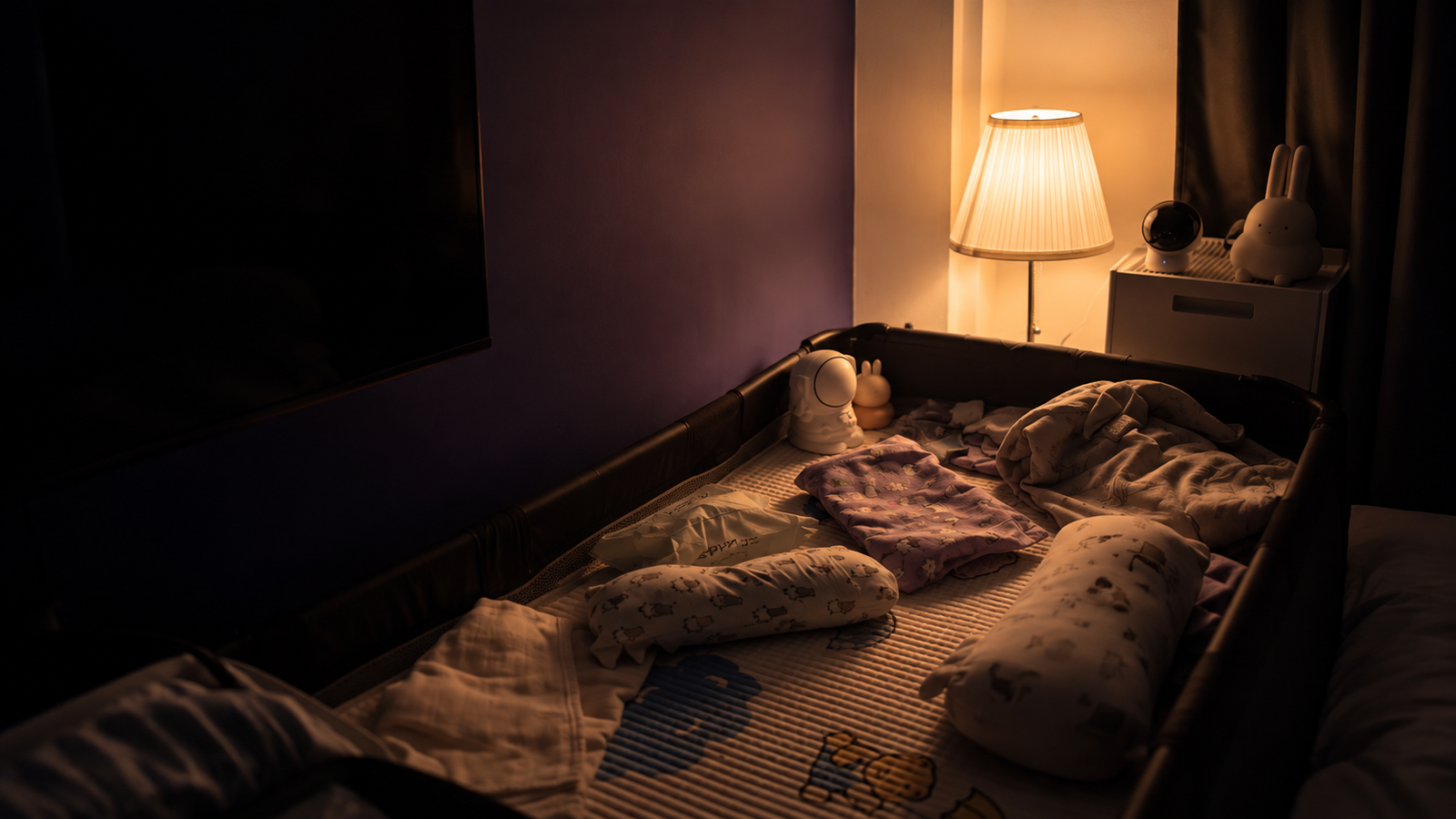
This is the first post in my newborn series, and I’m starting with something I never expected to care about: getting a proper baby night light setup in our master bedroom. No fancy renovation, no electrician. Just a couple of lamps, the right bulbs, and a little bit of smart home help.
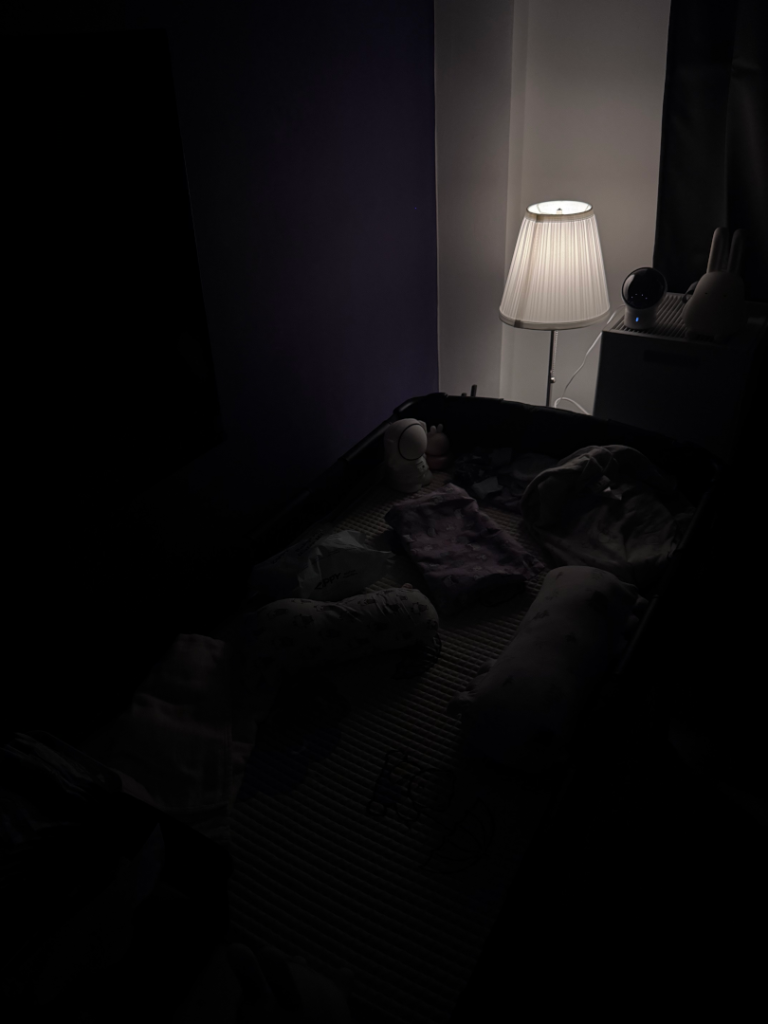
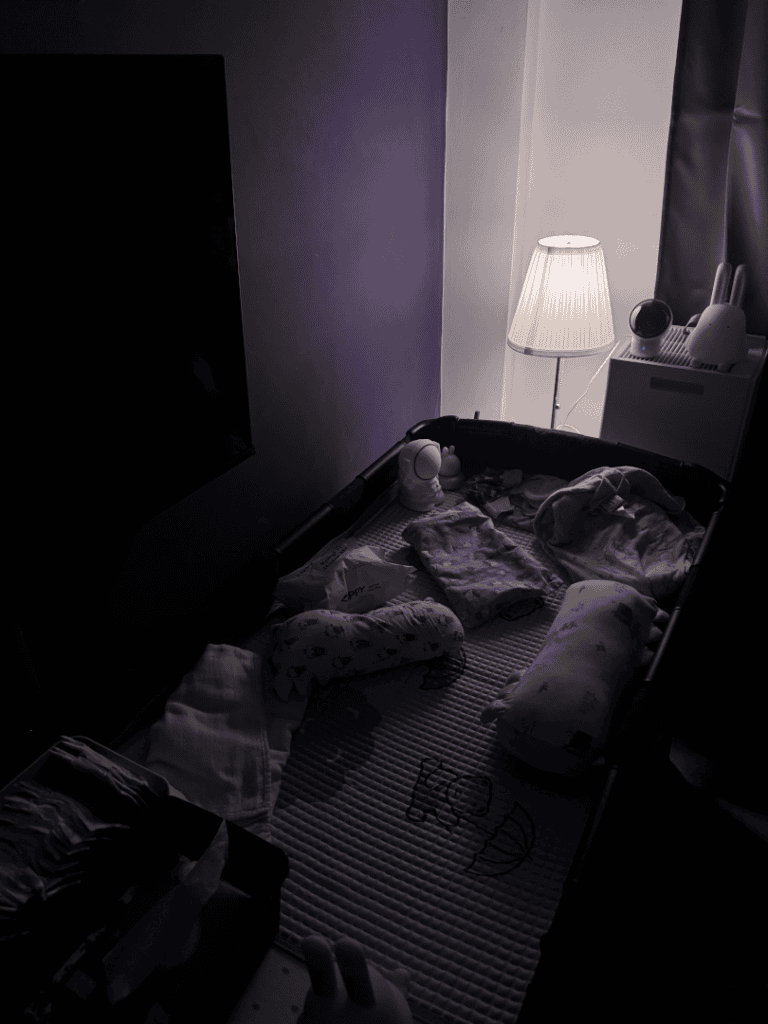
[Image: The full bedroom setup at night]
Where It Started: The Xiaomi Yeelight Bedside Lamp
Before kids, we had a Xiaomi Yeelight Bedside Lamp. I honestly can’t remember if it was the Gen 1 or Gen 2. For a couple in a standard HDB master bedroom, it was more than adequate. Reading before bed, a bit of warm light to wind down, done.
Then a tiny human moved in and “adequate” stopped being the right benchmark.
Kid #1: The IKEA Sambord Floor Lamp
With our firstborn, I quickly realised I needed something way less harsh. Not a lamp pointed at your face, but something that gives the room a dim glow so you can move around without waking anyone up (yourself included).
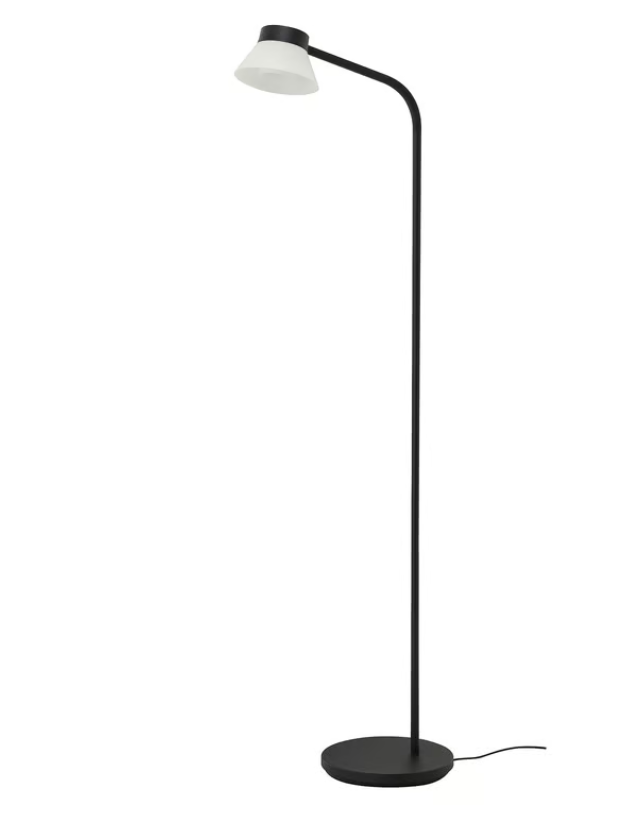
That brought us to the IKEA Sambord, an affordable floor/reading lamp with a GU10 fitting and a bendy gooseneck, so you can point the light wherever you want it.
| IKEA Sambord | Details |
|---|---|
| Type | Floor/reading lamp |
| Height | 115 cm |
| Base / shade diameter | 22 cm / 13 cm |
| Bulb fitting | GU10 (sold separately), max 8.5 W |
| Switch | Push button on the lamp head |
| Materials | Steel base and tube, aluminium shade holder, polycarbonate shade |
| Price | S$29.90 at IKEA Singapore |
We initially fitted it with an IKEA Solhetta 4000K, 345-lumen GU10 bulb.
Quick detour for anyone who, like the old me, never looked at the numbers on the box:
- Lumens (lm) = how bright. Higher means brighter.
- Kelvin (K) = colour of the light. Lower (around 2700K) is warm and yellowish, higher (4000K and up) is whiter and cooler.
That 4000K, 345lm combo worked for a long time. It was soft enough for night feeds and bright enough to actually see things.
Kid #2: Going Dimmer and Warmer
When our newborn arrived, the goal shifted. We didn’t just want to see in the dark. We wanted both kids to ease into sleep more easily.
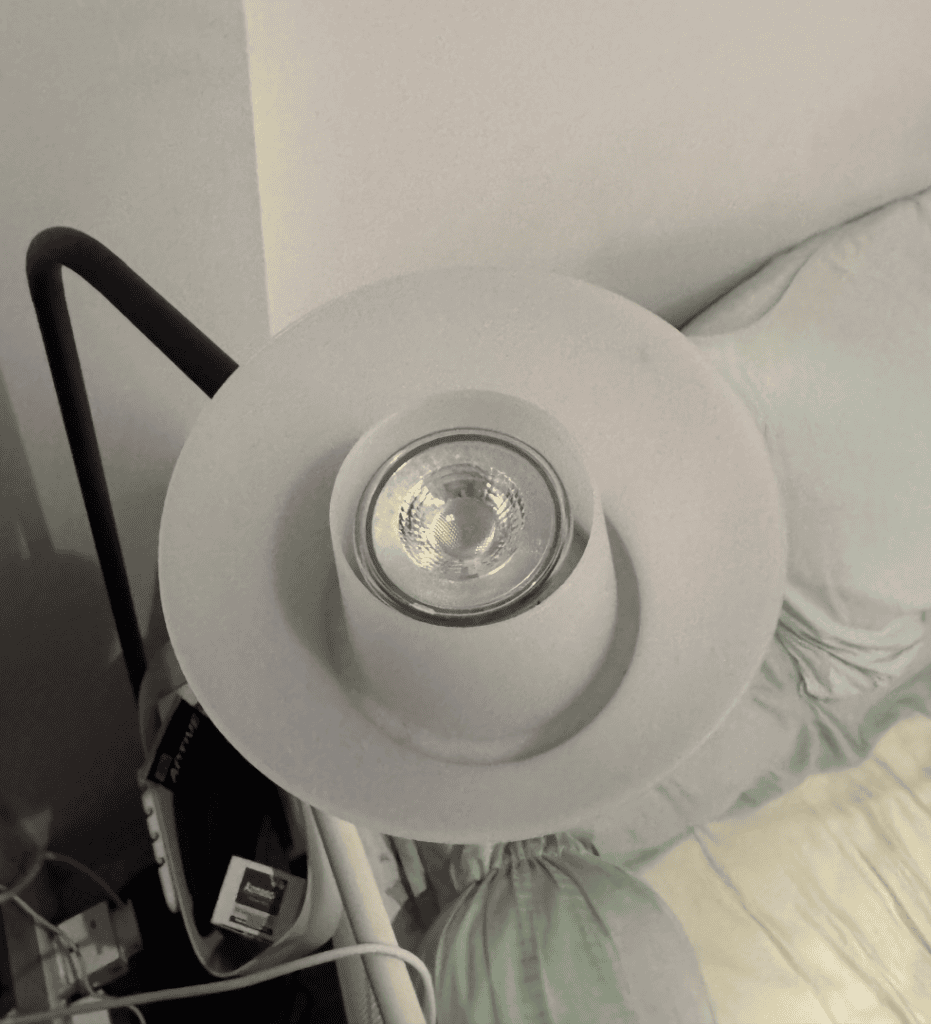
So we swapped the bulb for an IKEA Solhetta GU10 LED: 2700K and 230 lumens. That’s about a third less light than before, and a lot warmer too.
Doesn’t sound like a big change on paper? Dimmer and warmer together make a bigger difference than either number suggests. Enough light to see where you’re walking, but soft enough that it feels like the room is winding down with you. We’re loving it. It’s the perfect warm glow for drifting off to dreamland.
Making It Smart: The Tapo P110 Smart Plug
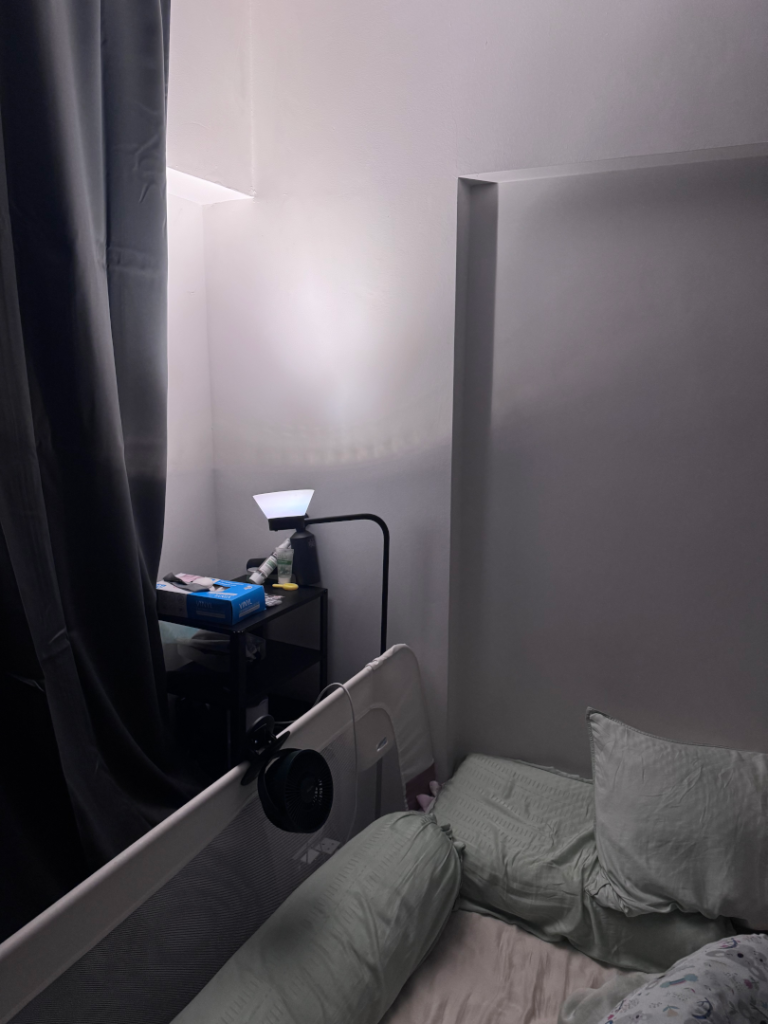
The Sambord doesn’t have any smart features, so I paired it with a Tapo P110 smart plug and linked it to Google Home.
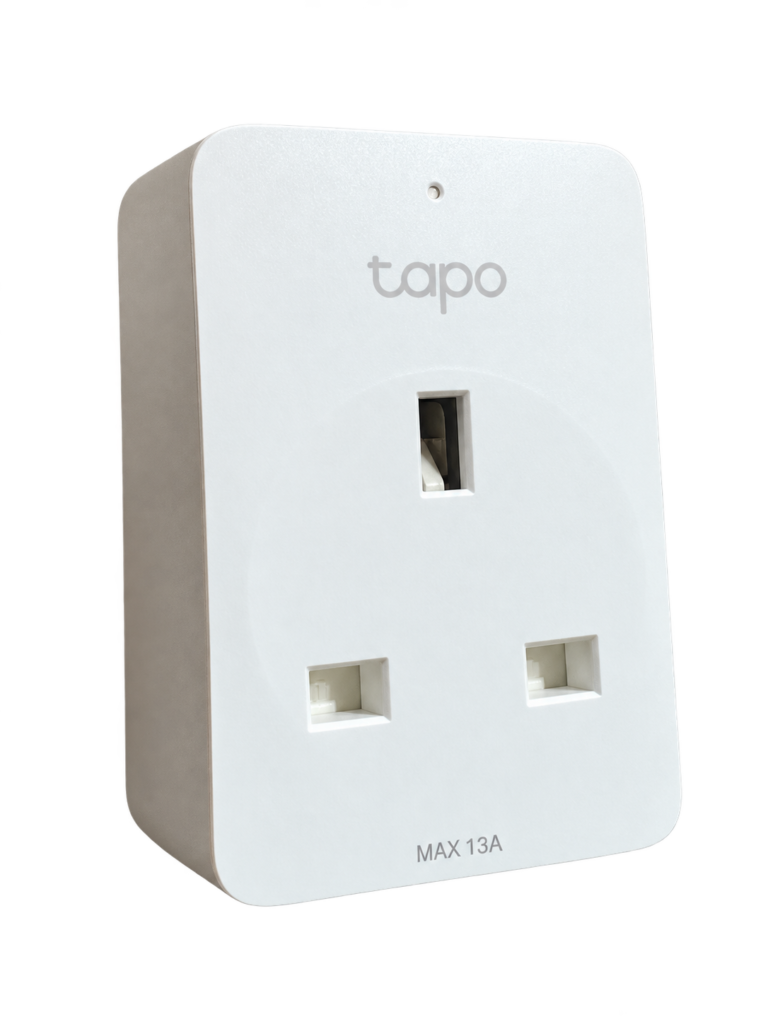
| Tapo P110 | Details |
|---|---|
| Type | Mini smart Wi-Fi plug with energy monitoring |
| Connectivity | 2.4 GHz Wi-Fi, no hub needed |
| Max load | 13 A / 2990 W |
| Voice assistants | Google Assistant, Amazon Alexa |
| Extras | Schedules, timers, Away Mode, real-time energy tracking |
| Size | 72 × 51 × 40 mm, compact enough not to block the neighbouring socket |
| After a power cut | Returns to its previous on/off state by default |
| Price | S$17.90 – S$18.90 (Shopee | Lazada) |
This sounds like a gimmick until you’ve had a baby in one arm and a milk bottle in the other, and the switch is on the other side of the room. Or until you finally get everyone to sleep, you’re lying in bed completely spent, and the thought of getting up to flip a switch feels like a marathon. “Hey Google, switch off the light” becomes the most satisfying sentence of the day.
The big, big bonus? My son now imitates me. Hearing a toddler say “hey Google switch off light” is worth the price of the plug alone. (Whether Google understands him is a different story.)
Why Our Portable Baby Night Lights Weren’t Enough
Ever since our firstborn, we’ve been using portable, rechargeable night lights. They worked fine, and we were okay with charging them every few days.
But with our newborn, I hit their limit: diaper changes. A small portable baby night light is great for a quick check or a feed, but it simply wasn’t enough when I needed to change my younger one’s diaper.
I hate fiddling around in the dark, not sure if she peed or pooped. And yes, I know I could just touch to find out. I’d rather not. (Pee, I can usually tell from the outside of the diaper. Parenthood gives you skills nobody puts on a résumé.)
The New Addition: IKEA Årstid + Tapo L530E Smart Bulb
A couple of days ago, we added an IKEA Årstid table lamp. It’s one of IKEA’s longest-running lamp series, and the fabric shade spreads the light nicely instead of beaming it in one direction. In night light mode, that shade softens an already dim light even further, which is exactly what you want when a baby is asleep a metre away.
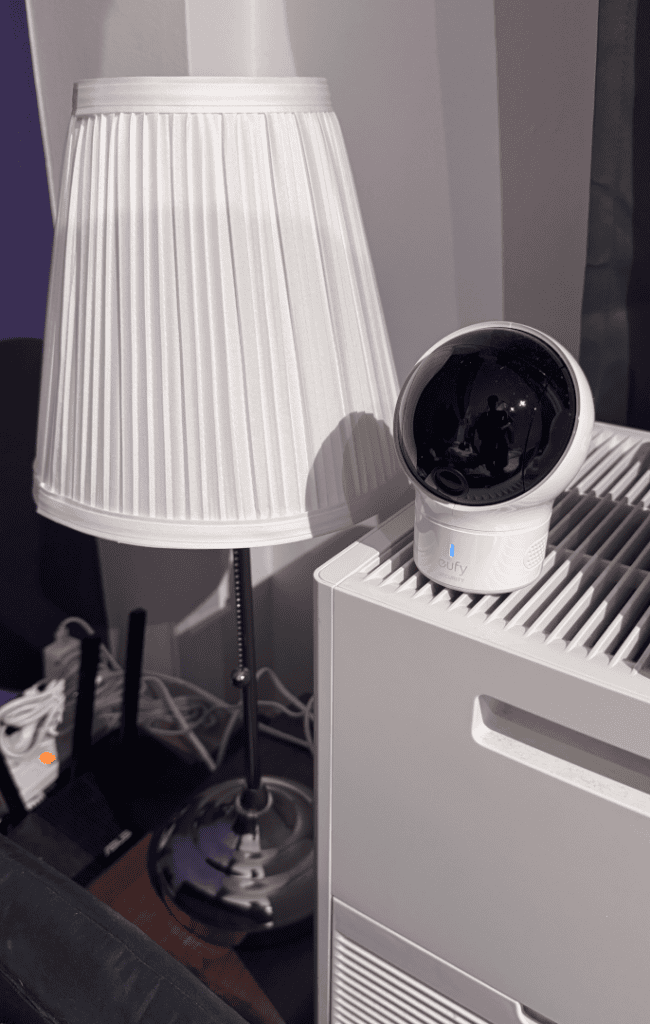
| IKEA Årstid | Details |
|---|---|
| Type | Table lamp |
| Height | 55 cm |
| Base / shade diameter | 15 cm / 22 cm |
| Bulb fitting | E27 (sold separately), max 75 W |
| Switch | Pull switch |
| Cord length | 203 cm |
| Materials | Nickel-plated or brass-finish steel base, polyester fabric shade |
| Price | S$29.90 at IKEA Singapore (nickel-plated/white) |
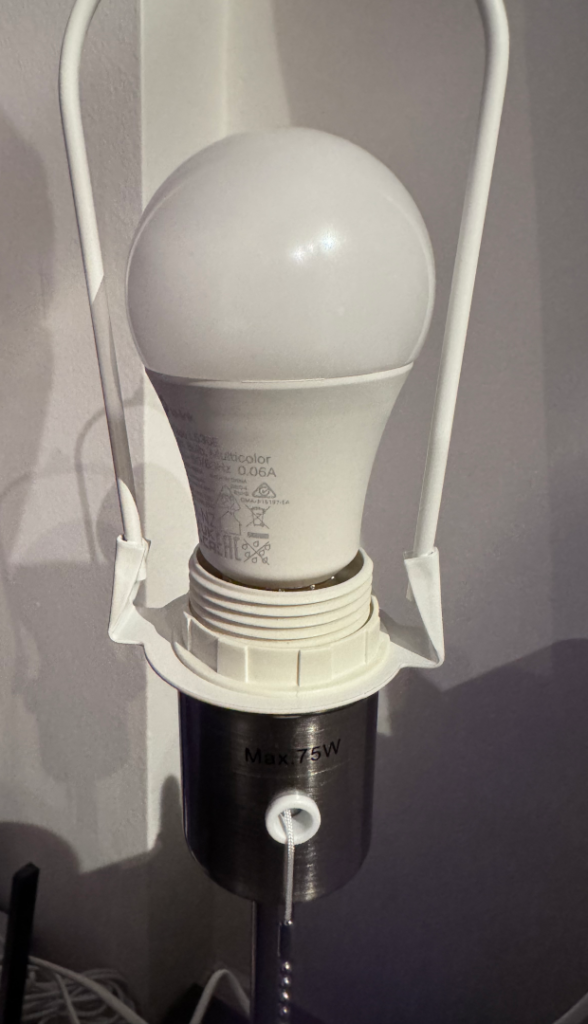
Into it went a Tapo L530E smart bulb.
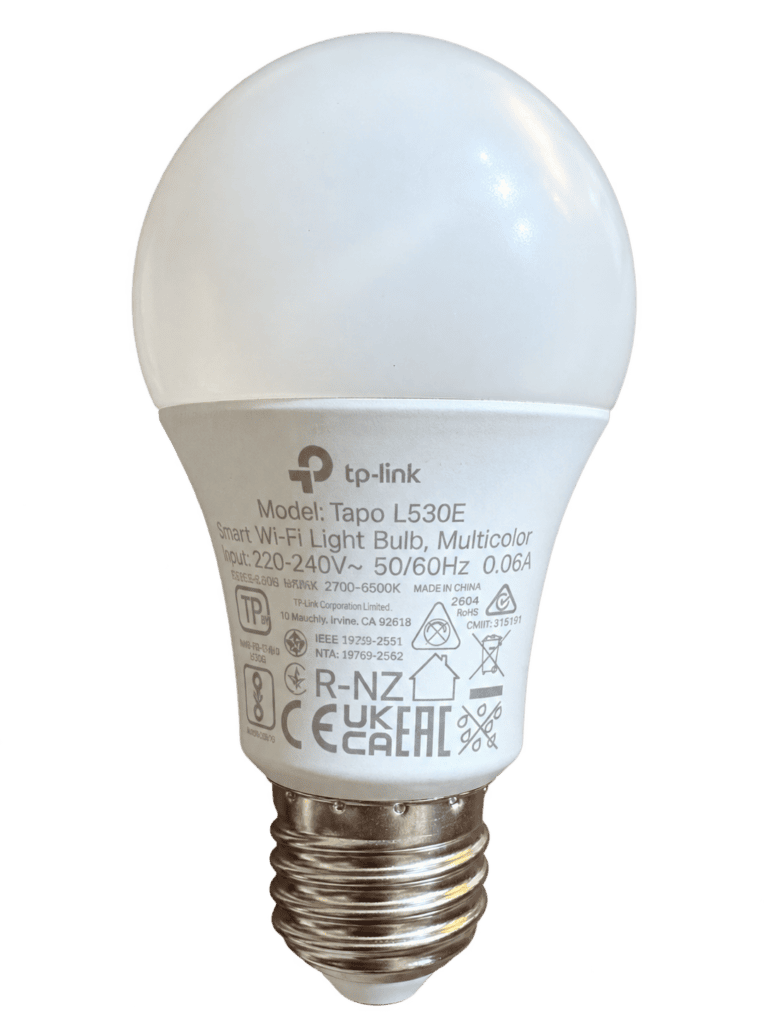
| Tapo L530E | Details |
|---|---|
| Fitting | E27 |
| Brightness | 806 lumens (60 W equivalent), dimmable 1–100% |
| Power | 8.7 W |
| Colour temperature | 2500K–6500K, plus 16 million colours |
| Connectivity | 2.4 GHz Wi-Fi, no hub needed |
| Voice assistants | Google Assistant, Amazon Alexa |
| Extras | Saved presets, schedules and timers, sunrise/sunset modes, Away Mode |
| After a power cut | Restores its last light state |
| Rated lifetime | 15,000 hours |
| Price | S$13.37 – $19.00 (Shopee | Lazada) |
I needed this light to work in two modes:
- Night light mode: really, really dim, just enough to see the baby.
- Diaper change mode: bright enough to actually see what I’m dealing with.
A smart plug couldn’t do that, which is why I went with a smart bulb this time (more on that debate below). I saved both modes as presets in the Tapo app, so switching between them is one tap or one voice command.
And why the 806lm version instead of the brighter one? Two reasons. It’s more affordable, and it’s more suited to what I need. I’m not trying to light up a stadium. 806 lumens is already plenty for a 3am diaper change, and honestly, I’ll probably never turn it up that far. Diaper change mode sits well below full brightness. I needed something weak, not strong. The old me would never have said that sentence.
One stone, two birds: a single lamp that’s both our night light and our diaper-change light.
Smart Plug vs Smart Bulb: Which One Should You Get?
Having used both in the same room, here’s how I’d break it down.
Smart plug
Pros:
- Works with any lamp and any bulb. This is the big one. I could pick the exact bulb I wanted, a 230lm, 2700K GU10, and still make it smart.
- Not tied to a bulb fitting. The Sambord takes GU10. Smart GU10 spotlights do exist (Tapo sells a couple in Singapore), but a regular GU10 bulb plus a plug I already had was the simpler route. A plug doesn’t care what’s in the lamp.
- Works beyond lighting. If you change your mind, it can run a fan, a humidifier or a bottle warmer instead. The P110 also tracks energy use.
- Cheaper in the long run. A regular bulb costs a fraction of a smart bulb. The smart plug is a one-time purchase, and every bulb after that is the cheap kind. So if all you need is on and off, the smart plug route saves you plenty over time, especially when a bulb dies or your needs change (and with kids, they will).
Cons:
- On and off only. No dimming, no colour temperature changes, no presets.
- The lamp’s own switch has to stay on. If someone presses the button on the Sambord, the plug can switch power all it wants and nothing happens.
Smart bulb
Pros:
- One lamp, many modes. Dimming, warm to cool white, even colours. This is what makes the Årstid work as both a night light and a diaper-change light.
- Presets and schedules with brightness built in. You can schedule not just when it turns on, but how bright and how warm.
- Frees up the socket. No extra box sticking out of the wall.
Cons:
- The lamp or wall switch must stay on. Switch it off and the bulb drops off Wi-Fi, so voice control stops working. In a house with a curious toddler, that pull switch on the Årstid is a genuine risk. (Guess who’s been told not to touch it.)
- Limited by fitting. You’re stuck with whatever smart bulbs are sold for your lamp’s fitting, so check before you buy the lamp.
- Pricier per light, and when it dies, you replace the whole smart bulb.
My rule of thumb
- Get a smart plug if the lamp only ever needs to be on or off, or if you want to use a specific regular bulb you already like.
- Get a smart bulb if one lamp needs to do more than one job, like dim for sleep and bright for diaper changes.
That’s exactly why our room has one of each.
The Verdict: What I’d Tell Other New Parents
If you’re setting up a baby night light arrangement in your room, here’s what I learnt over two kids:
- Look at the lumens, not just the colour. Warm light helps, but a warm bulb that’s too bright is still too bright. Going from 345lm to 230lm, and from 4000K to 2700K, made a bigger difference than I expected.
- Go warm, 2700K or lower, for the sleep lamp. It just feels calmer at night. The Solhetta sits at 2700K, and the Tapo L530E goes even warmer, down to 2500K.
- Pick smart plug or smart bulb based on the job, not on which one sounds cooler.
- You probably don’t need the brightest smart bulb. For a bedroom with a baby, the lower-lumen version is cheaper and more useful.
None of this is expensive or complicated, and it all fits in a standard HDB master bedroom. It’s the kind of small upgrade you don’t realise you need until you’re squinting at a diaper at 3am.
What’s Next for Our Setup
I’m not done tinkering. A few things on my list to level up my smart home for new parents game:
- Lights that follow a circadian rhythm. Cooler and brighter in the day, gradually warmer and dimmer toward bedtime, all on a schedule so nobody has to think about it.
- A feeding-time display. I’ve got my eye on the ESP32 “Cheap Yellow Display” board (ESP32-2432S028R), a small touchscreen that I want to turn into a bedside screen showing when the last feed was. Because at 3am, nobody remembers.
- Physical buttons for the lights, probably through Home Assistant. Voice control is great, until everyone’s asleep and saying “Hey Google” out loud is the last thing you want to do.
I’ll cover each of these in upcoming posts in the newborn series. Stay tuned.