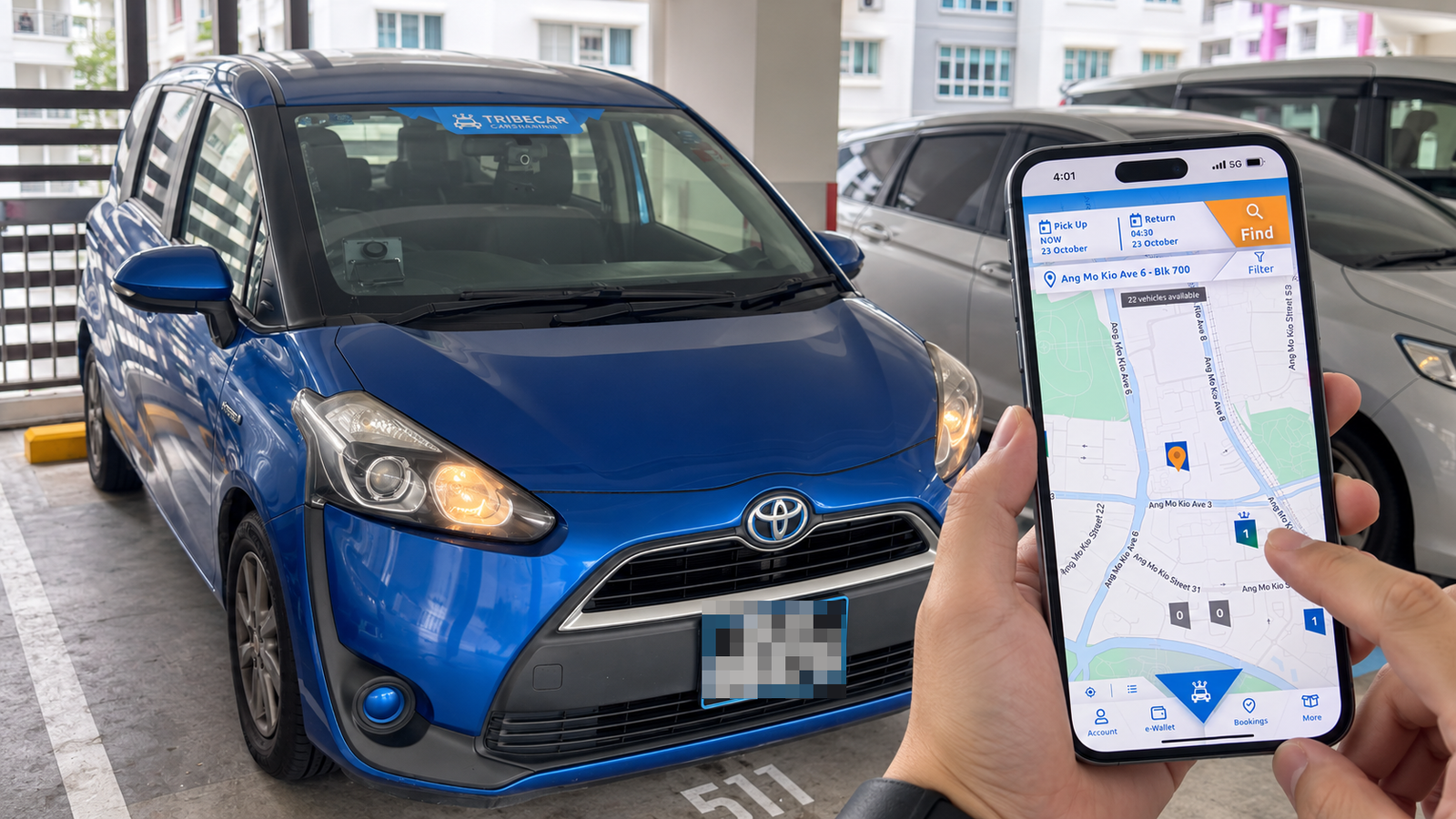
My phone rang at about 1pm. It was Tribecar’s customer support. Someone was waiting for the car I was supposed to have returned already.
Where was I? At the petrol station, topping up the tank I’d left too late to refuel. I paid in cash, didn’t flash my SPC membership, and didn’t keep the receipt. Three mistakes in five minutes. Damn!
So yes, this Tribecar review comes with lessons learnt the hard way. After writing my GetGo car sharing guide, I wanted to give Singapore’s other big car-sharing service a fair shot. I’d actually had a Tribecar account before and terminated it, so I re-registered, booked a Toyota Sienta Hybrid for a 4-hour weekday trip, and took notes. Here’s my Tribecar review for Singapore drivers, mistakes and all.
Quick tip: New to Tribecar? Use my referral code zrgmr when signing up. Once you make your first e-wallet top-up of at least $50, we both get $15 in e-wallet credits.
What Is Tribecar?
Tribecar is a car-sharing platform where you book cars through its app, collect them from a carpark, and return them to the same spot. Like GetGo, it’s point A-to-A only.
The difference is in the fleet. Tribecar doesn’t own all its cars. It lists cars from partner rental companies, plus privately owned cars from individual owners. It also absorbed CarClub, one of Singapore’s oldest car-sharing outfits, back in 2022.
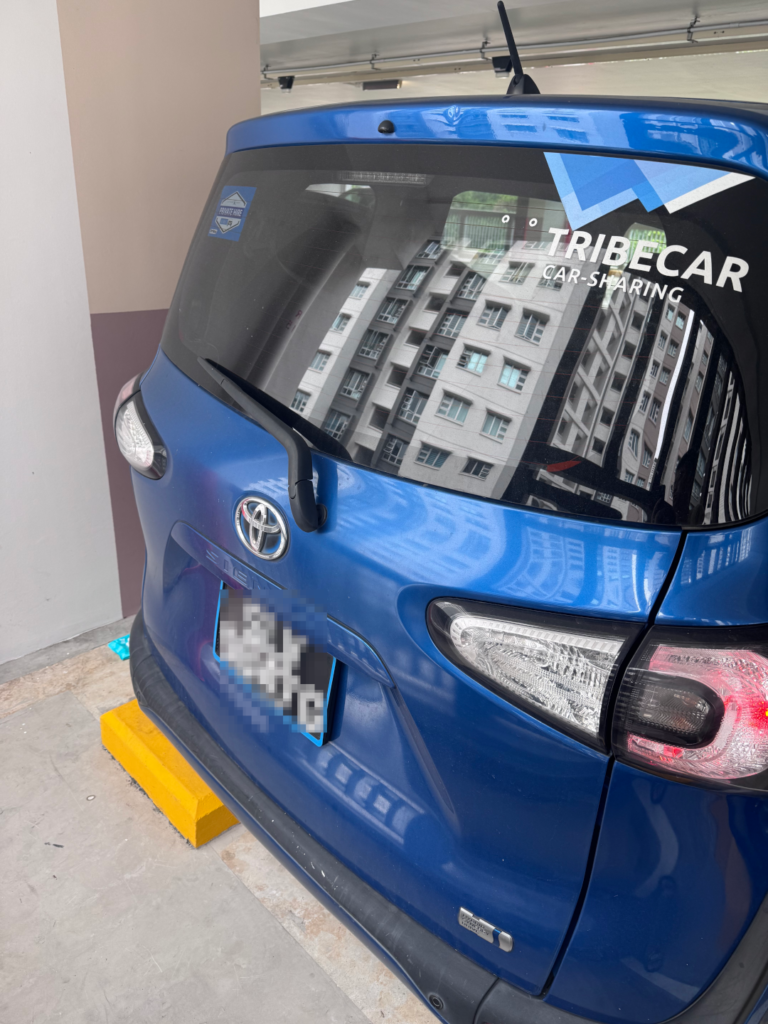
Two things Tribecar lets you do that matter to some readers: you can drive Grab (PHV) with its cars, which GetGo bans (my Sienta even had a “Private Hire” sticker on the rear windscreen), and you can drive into Malaysia with selected cars (more on that in the comparison below).
Signing Up: Deposit, E-Wallet and the New Driver Surcharge
I had to pay a $100 security deposit. GetGo asks for none. To be fair, Tribecar counts me as a new driver, and new drivers pay this deposit. I can’t confirm whether experienced drivers pay it too.
The only way to pay is through Tribecar’s e-wallet. You top up first, then bookings are deducted from your balance. My receipts showed no top-up fee. The reassuring part: when you terminate your account, Tribecar refunds both the deposit and your remaining balance. I’ve done it before, and the money came back.
Now the new driver bit. If you’re under 23, or have less than 2 years of driving experience, every booking carries a new driver surcharge. That’s me. There’s no fudging it either: sign up with SingPass and Tribecar pulls your exact licence date.
Tribecar’s FAQ says the surcharge is 30%. Oddly, my receipt shows a “Probation” charge of $4.80 on a $24 rental, which works out to 20%. I’m not complaining, but check your own breakdown.
Young P-Platers: Tribecar Is Your Option
This is a big one for younger drivers. Between the two, Tribecar is the only one that accepts an 18-year-old on a P-plate.
- Tribecar accepts drivers aged 18 to 65, including P-plate holders. Drivers under 23 or with less than 2 years’ experience may need additional account approval.
- GetGo requires you to be 19 or older with at least a year of driving experience. It doesn’t accept P-plate licences, unless you’re 25 or older.
So if you’ve just passed your test and you’re under 25, GetGo is out. Tribecar is one of your very few options, if not the only one. Expect a new driver surcharge, the deposit, and a narrower choice of cars, generally Economy cars (older models) and selected Standard cars.
My First Tribecar Drive: Toyota Sienta Hybrid
Booking: You Can’t See the Plate First
On GetGo, my go-to trick is checking the number plate to dodge old SK and SL plated cars. On Tribecar, you only see the plate after you’ve booked.
The workaround is the model generation. My listing said “Toyota Sienta Hybrid 2nd Gen or similar”, which hints at the car’s age. Sure enough, mine turned out to have an SLV plate, exactly the kind of older car I tell GetGo readers to avoid.
Could I have cancelled? Tribecar doesn’t allow amendments, only cancel-and-rebook:
- More than 48 hours before: $0.88
- 24 to 48 hours before: 50% of the rental
- Less than 24 hours before: 80% of the rental
Festive periods cost 20% even more than 48 hours out. Guess who checked his plate the night before pickup? Old Sienta it is, then.
Pro tip: Book more than 48 hours ahead and check your plate straight away. Landed an old car? Cancel for $0.88 and try another listing.
One honest caveat, though. If Tribecar labels you a new driver like me, you’re limited to mostly older Economy and Standard cars. So whatever hacks you try, chances are you’ll still end up with an older plate. Manage your expectations.
Pickup: Photos and a Physical Remote
The app asked for photos of the car before I could start the trip. Good. That’s your protection against being blamed for someone else’s scratches.
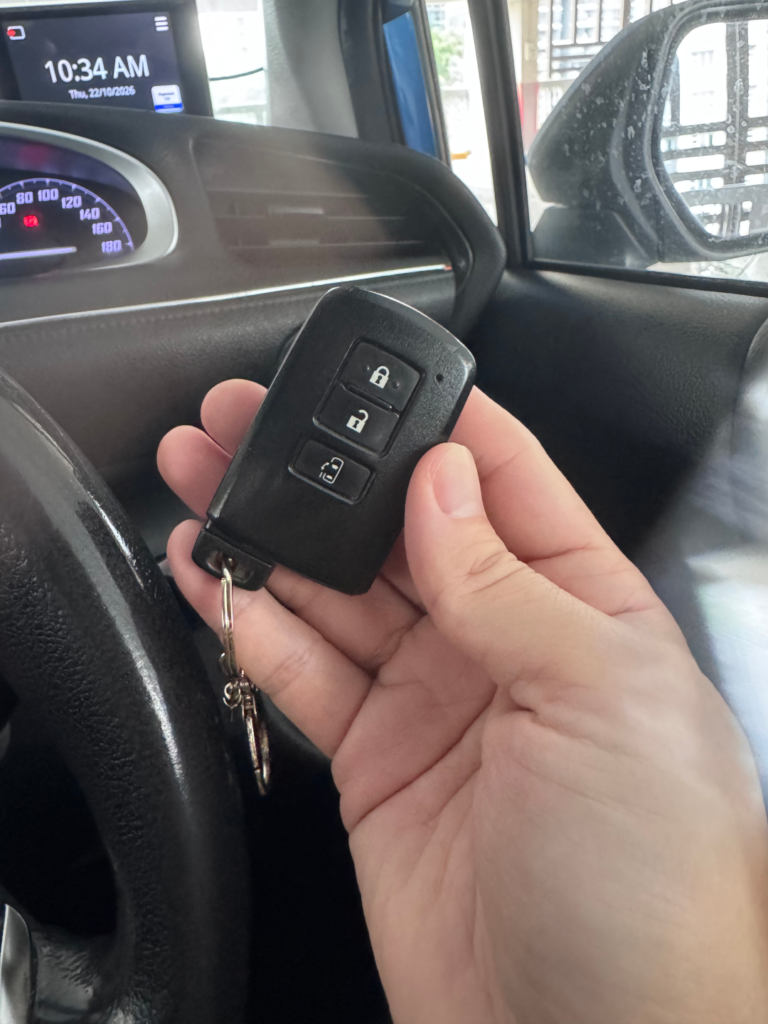
The first unlock was through the app. After that, every lock and unlock was done with a physical remote, just like your own car. It’s listed right on the booking as included, along with basic insurance and a 24/7 emergency hotline. I much prefer this. GetGo is app-only, and every toilet break or trip to the boot means pulling out your phone and hoping your signal holds up in the carpark.
Decals: Surprisingly Discreet
Tribecar’s branding is low-key: a small decal at the top front and top rear, plus some around the number plate. GetGo’s standard cars have loud door decals. You’d have to pay more for its Select or Grand categories to get that subtle look. My bog-standard Sienta came that way.
Condition: Old but Clean
Was it dated? Yes. With an SLV plate and 180,960 km on the odometer when I returned it, I knew what I was getting.
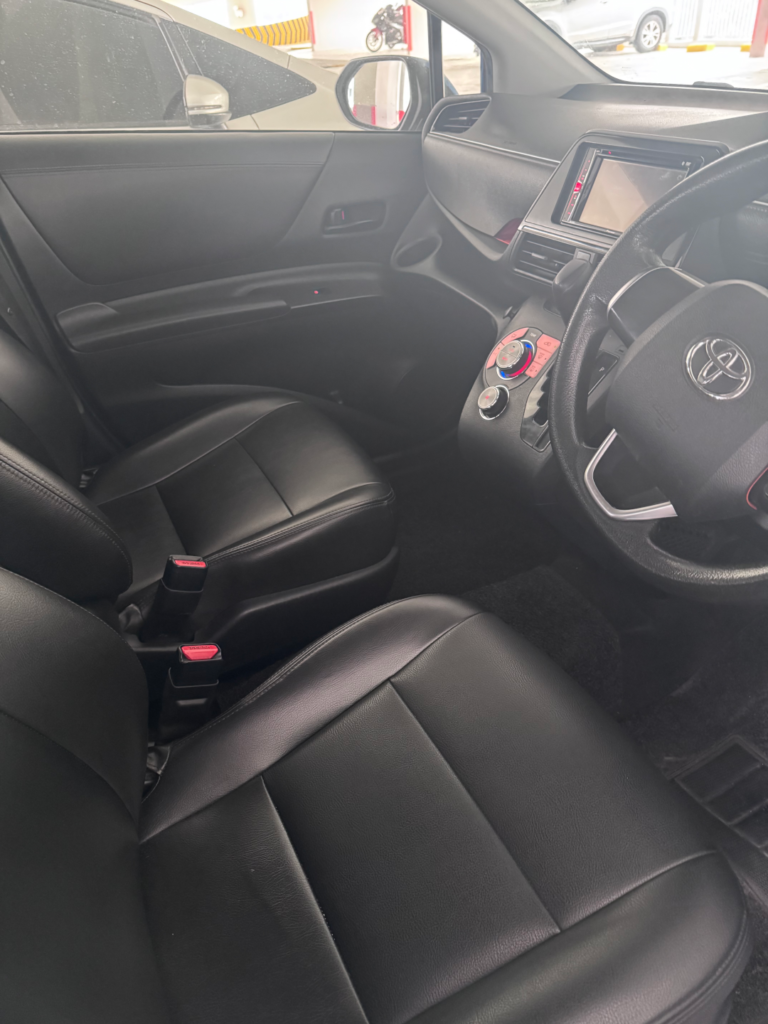
What surprised me was the interior. It felt freshly detailed: shiny leather seats, and a cabin that was largely clean by car-sharing standards. After all those GetGo rentals where I pack disinfectant wipes and air freshener as standard, this was a welcome change.
There was even a bottle of fragrance in the car, so it smelled good too. I don’t think that’s standard issue in every Tribecar. More likely, a previous driver left it behind and paid it forward. I’m fairly certain, but I’ve only rented one Tribecar so far, so don’t hold me to it.
The exterior was on par with any car-sharing car.
On the Road
The Sienta drove exactly as expected. It was comfortable and got me from point A to point B. Nothing exciting about the drive, but it wasn’t supposed to be. It’s a fuel-efficient hybrid, not a street racer.
The one real gripe: sound insulation was bad. Again, that’s typical of cars at this price point, so no surprise there.
No cash card is provided, so bring your own for ERP and parking. Same deal on GetGo, which also asks you to bring your own. I didn’t test CarPlay this time, so I can’t vouch for it either way.
Fuel: Where It All Went Wrong
My Sienta was tagged “no mileage fee”. Instead, you pay for your own fuel and return the car without the reserve fuel light on. GetGo does the opposite: it charges $0.44/km for most cars and pays for your petrol with a fuel card in the car.
I’ll be honest: I like the simplicity of GetGo’s way, but not its cost. Mileage charging lets me be brain-dead about fuel, and that’s how I like it. Paying your own fuel is a bit of Russian roulette by comparison. Your starting level depends on what the last driver left you. And how much should you top up? $5? $10?
But for value, paying your own fuel wins. On my roughly 23 km round trip from Punggol to Tampines, I probably burned only about $3.30 to $4.10 of petrol. GetGo would have charged around $10 in mileage.
First-timer tip: on the Sienta, the fuel lid release is a lever on the floor beside the driver’s seat, by the door. Find it before you pull into the petrol station.
So how much should you pump? Here’s my rough formula:
- Check the odometer at pickup and before refuelling, to see how far you’ve driven.
- Assume 10 to 12 km per litre. That’s well below what a hybrid actually does, and that’s deliberate. The lower the figure you assume, the more litres you’ll pump. More buffer, but it hurts your pocket more. Pick your own balance.
- Add a 10% to 15% buffer, then pump that amount.
For my 23 km trip, that works out to:
- Leaner end (12 km/L, plus 10%): about 2.1 litres, or roughly $7.50 of 95 petrol
- Safer end (10 km/L, plus 15%): about 2.6 litres, or roughly $9.40
My $10 top-up landed just above the safer end, so I was covered. For a hybrid like the Sienta, real consumption is closer to 20 km/L, so even the leaner end leaves a healthy buffer for the next driver. That should be enough, at least for your conscience. And if you top up a little more than you used? I see it as paying it forward. We’re a community, after all.
Then came the scare. The gauge showed 2 bars at pickup and only 1 bar when I returned the car, even though I’d added more fuel than I used. Tribecar’s FAQ explains it: some models need at least 6 litres before the gauge registers a top-up, and Tribecar recommends refuelling at least that much every time. My $10 bought about 2.8 litres.
I disagree with that recommendation for short trips. Six litres is about $21 of petrol for a drive that burned barely more than a litre. That’s more than double GetGo’s mileage charge. Still, without a receipt, I couldn’t prove I’d refuelled at all. I’ve emailed support, and I’ll update this post with how it goes.
What I didn’t know until after my trip: not every Tribecar works like mine. Cars tagged FlexiFuel let you choose between a mileage charge and paying your own fuel.
Pro tips:
- Keep your fuel receipt, and pay by card so there’s a backup record. Use your petrol membership too, since saving on fuel is the whole point.
- Refuel earlier, not at the last minute. Leave yourself enough time before your booking ends, so a queue at the pump doesn’t make you late.
- Pick a full hybrid like the Sienta if you’re paying for your own petrol. It runs on electric power in stop-start traffic, so it sips fuel.
Returning the Car (Late, Oops)
Which brings me back to that phone call. My refuelling stop made me late, and that’s on me.
Unlike GetGo, Tribecar has no grace period. The late fee is $10 plus GST, or S$10.90, for every 15-minute block or part thereof, so even one minute late costs a full block. I ended my trip at 1:11pm, 11 minutes late, and paid for one block. GetGo charges $15 per block, but only after a 15-minute grace period.
If you think the late fee is unfair, there’s an “Appeal Late Fees” button right on the past booking page. I didn’t use it. My lateness was entirely my fault.
I felt bad for the waiting driver. Tribecar does compensate them $5.45, and they can cancel for a full refund if the wait drags on. Still, budget 15 minutes for refuelling. Someone is probably waiting for your car.
What It Cost Me
New joiner promo: Enter promo code TCWELCOMEU when booking to get $15 off your first booking, valid until 31 Dec 2026. The banner says “15% off”, but I can confirm it’s $15, because that’s exactly what came off my receipt.
Here’s my receipt for the 4-hour booking, from 9am to 1pm:
| Item | Amount |
|---|---|
| Rental (4 hours) | $24.00 |
| Probation (new driver surcharge) | $4.80 |
| Excess Rider (TribeShield) | $2.56 |
| Personal Accident Insurance | $1.10 |
| Platform fee | $1.20 |
| Late return | $10.00 |
| TCWELCOMEU discount | −$15.00 |
| GST (9%) | $2.58 |
| Total paid to Tribecar | $31.24 |
| Petrol, paid separately | $10.00 |
| Total out of pocket | $41.24 |
That’s $6 an hour for the car itself, which is cheap. The add-ons are where it adds up. TribeShield and Personal Accident Insurance are optional, and I chose both. The $1.20 platform fee matches GetGo’s.
Without my late fee, the Tribecar bill would have been $20.34. So my lateness cost me more than a third of the booking. Ouch.
New to the Toyota Sienta? Where to Find Things
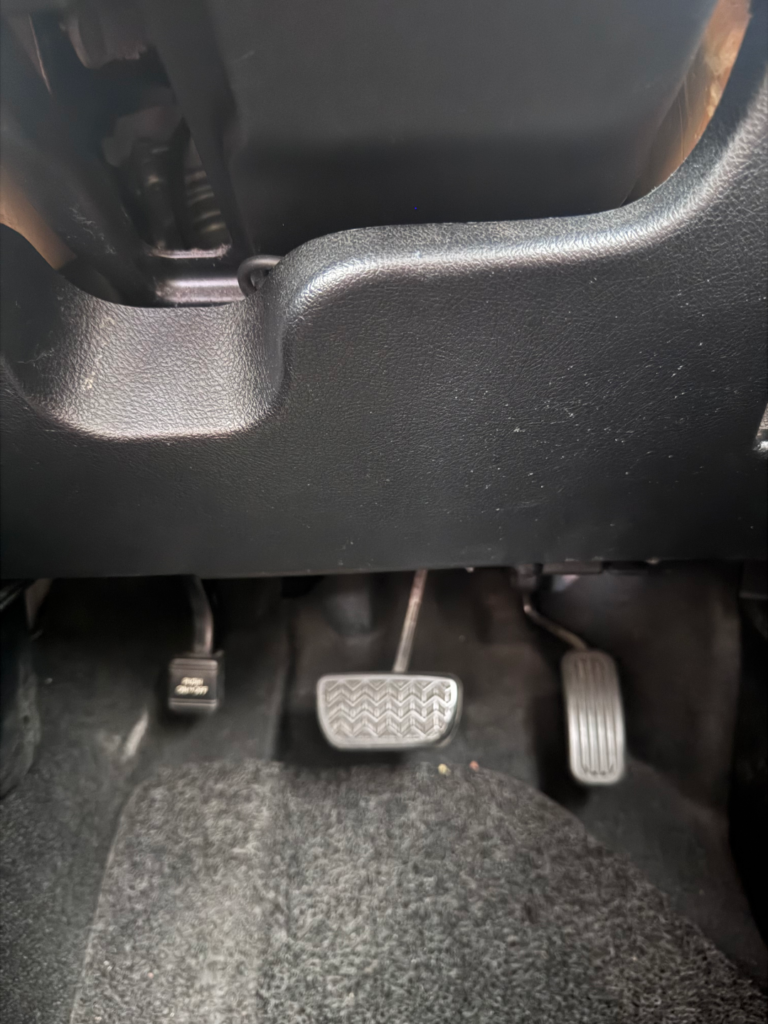
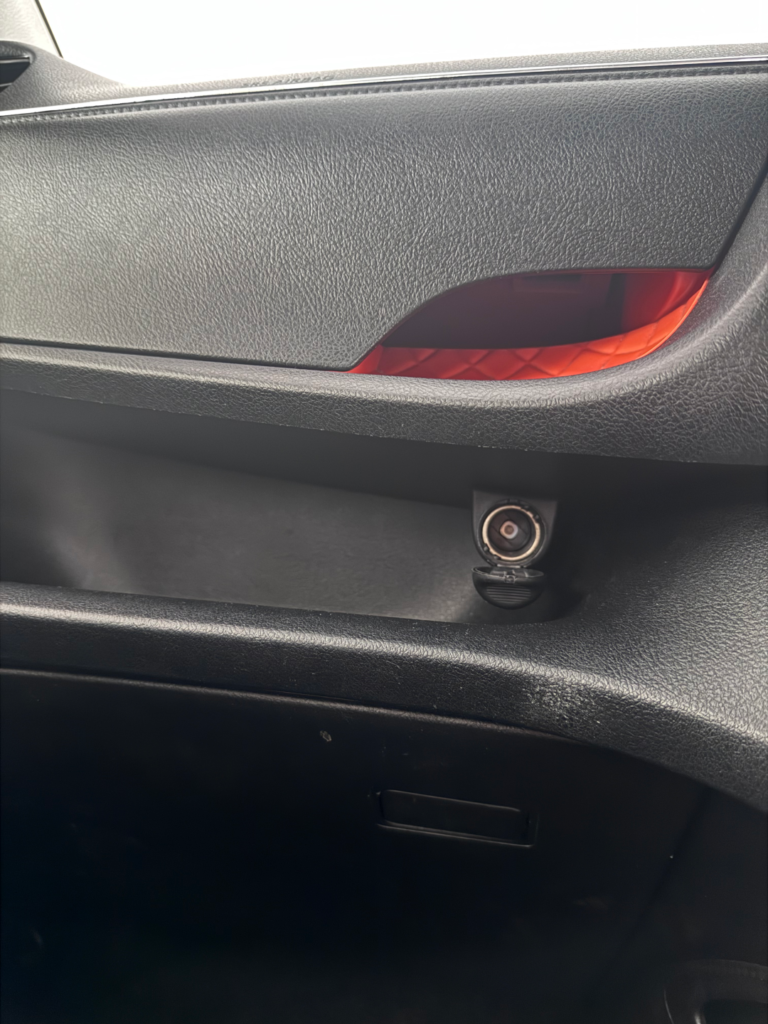
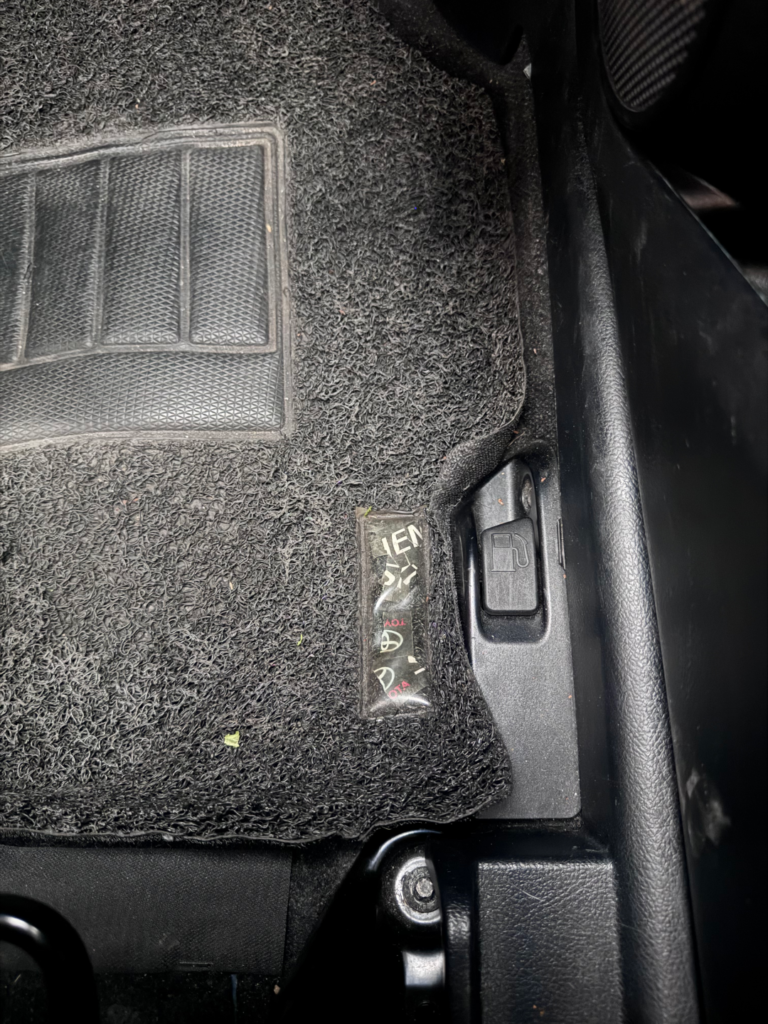
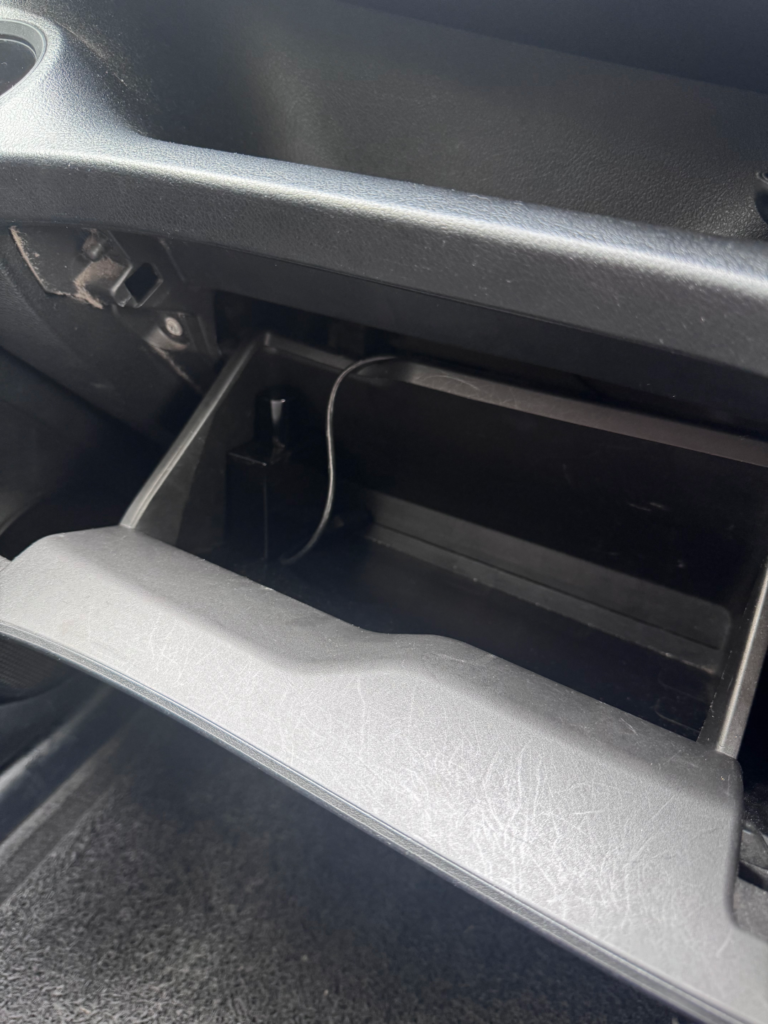
Hopping into an unfamiliar car in a car-sharing carpark, with the clock ticking, is no fun. I always appreciate knowing where things are before I set off, so here’s a quick guide for the 2nd Gen Sienta Hybrid:
- Parking brake: a foot pedal at the far left of the driver’s footwell. Press it to engage, and press it again to release. There’s no handbrake lever.
- 12V socket: on the passenger side of the dashboard, in the storage tray under the upper compartment, behind a flip cap.
- Fuel lid release: a lever on the floor beside the driver’s seat, by the door. Find it before you pull into the petrol station.
Tribecar vs GetGo
| Tribecar | GetGo | |
|---|---|---|
| Deposit | $100 for new drivers (refunded on termination) | None |
| Payment | E-wallet top-up only | Credit card, PayNow |
| Fuel and mileage | No-mileage cars: pay your own fuel. FlexiFuel cars: choose mileage or pay your own | $0.44/km for most cars, fuel card provided |
| Platform fee | $1.20 per booking | $1.20 per booking |
| Late return | S$10.90 per 15 minutes, no grace period | $15 per 15 minutes after a 15-minute grace period |
| Cash card for ERP and parking | Bring your own | Bring your own |
| Lock and unlock | App first, then physical remote | App only |
| Fleet size | 1,300+ (2022 figure) | 3,000+ vehicles, 1,700+ locations |
| See plate before booking | No | Yes |
| Decals | Discreet, even on standard cars | Loud, unless Select or Grand |
| Young P-plate drivers | Accepted from 18, with surcharge and limited cars | Not accepted unless 25+ |
| Drive to Malaysia | Selected cars, not new drivers, min 6 hours | Select and Plus cars since Sep 2026, not new drivers |
| Use for Grab (PHV) | Yes | No |
Fleet: GetGo is clearly bigger, with over 3,000 vehicles. The latest Tribecar figure I could find was over 1,300 in 2022. As a new driver, I’m also seeing only part of Tribecar’s fleet, which likely explains why most cars I saw were older.
Malaysia: This used to be a Tribecar-only perk. GetGo launched Drive to Malaysia in September 2026, though only for around 200 Select and Plus cars. Both are closed to new drivers like me. Since I can’t book it yet, check the Tribecar app for the current Malaysia surcharge.
Pro Tips for the Best Tribecar Experience
1. Choose newer cars whenever possible. Newer cars are usually cleaner, better maintained and have more modern features. Tribecar doesn’t show the plate before you book, so use the model generation in the listing as your clue. If you’re a new driver, expect mostly older cars regardless.
2. Book more than 48 hours ahead, then check your plate. If you’ve landed an old car, you can cancel for just $0.88 and try another listing. Inside 48 hours, cancelling costs 50% to 80% of the rental.
3. Pay a little more for a better model, if you can. Spending a few dollars more per hour for a newer or more premium car usually gets you a better experience. New drivers are mostly limited to Economy and selected Standard cars, though.
4. Expand your search radius. Don’t only look at cars in your immediate carpark. A 5 to 10 minute walk can get you a newer, cleaner car.
5. Pick your fuel option wisely. On FlexiFuel cars, choose the mileage charge if you want zero fuel hassle, or Pay-Your-Own-Fuel for better value. On no-mileage cars like mine, paying your own fuel is the only option.
6. Refuel earlier, and keep the receipt. Leave enough time before your booking ends, pay by card, and use your petrol membership. Photograph the dashboard with the receipt before you end the trip.
7. Use the checklist religiously. Before you leave the car, double-check you’ve retrieved:
- Your cables (USB-A and USB-C for CarPlay)
- Your cash card from the in-vehicle unit
- Your fuel receipt
- Disinfectant wipes
- Lumbar support
- Any personal items (phone chargers, sunglasses, bags)
And put the remote key back where you found it.
8. Remember: point A-to-A only. Plan your trips accordingly. You can’t use Tribecar for one-way trips. The car goes back to the same carpark you picked it up from.
9. Book during off-peak hours. Rates vary by time and day, so weekday off-peak slots are usually cheaper. [TBC: check your app’s peak/off-peak rates]
10. Extend early if you’re running late. There’s no grace period, and every 15 minutes late costs S$10.90. If you might overrun, tap “Extend Trip” in the app before your booking ends. You can’t extend after it ends, and it only works if the car is free for the extra time.
11. Document everything. The app asks for photos at the start and end of your trip, but take more than the minimum. Photograph all four corners, any existing scratches and the dashboard. It takes 2 minutes and can save you hundreds of dollars in disputes.
12. Report issues immediately. If you notice damage or a problem, report it through the app right away. Don’t wait until you return the car.
Pros and Cons
Pros
- App plus physical remote, far more convenient than GetGo’s app-only access
- Clean interior (on my trip, at least)
- Paying your own fuel is better value than mileage fees, and FlexiFuel cars give you the choice
- Discreet decals, even on standard cars
- Accepts young P-plate drivers from 18
- Cheap base rate: $6 an hour for my Sienta
- Allows Grab (PHV) driving
- Deposit and wallet balance refunded when you leave
Cons
- $100 deposit and e-wallet-only payment
- Mostly older cars for new drivers, even if you’re willing to pay more
- New driver surcharge
- Smaller fleet than GetGo
- Can’t see the plate until you’ve booked
- No grace period on late returns
- Paying your own fuel is guesswork, and refuelling eats into your booking time
- Poor sound insulation (on my older Sienta)
Tribecar Review Singapore: My Verdict
My experience with Tribecar was largely good, despite a couple of my own mistakes. I actually prefer Tribecar, though I can’t say I’ve been swayed from GetGo completely.
What I like:
- App plus remote key. Super convenient, and so much better than GetGo’s app-only access.
- Clean interior! Of the GetGos I’ve rented so far, only the more expensive tiers, like the Hyundai Kona EV, had clean interiors. The rest weren’t nasty, but they were clearly not in a good state.
- Paying your own fuel. Yes, it’s Russian roulette and it can be a hassle. But if you’re after value, I think it’s much better than mileage fees. If you’d rather be brain-dead about it, like I prefer, pick a FlexiFuel car with mileage charging.
- Discreet decals. I used to like loud stuff. Less so as I grow older, and Tribecar’s discreet decals speak to me.
- Young P-platers welcome. This one has nothing to do with me. But if you’re a really young P-plate driver, Tribecar is one of your very few options, maybe the only one. GetGo definitely won’t take you.
What I really don’t like:
- The $100 deposit and wallet-only payment. Personal pet peeve: I hate parking money anywhere other than my fixed deposits or ETFs.
- Only older cars for new drivers, even if you don’t mind paying more.
As for my $6-an-hour car turning into a $41 morning? That one’s on me. Learn from my mistakes, and Tribecar is a genuinely good alternative to GetGo.

Ready to try it? Sign up with my referral code zrgmr, top up at least $50, and we both get $15 in credits. Then enter promo code TCWELCOMEU at booking for $15 off your first trip.
Have you used Tribecar? How does it compare with GetGo for you? Let me know in the comments!
Disclaimer: This review is based on my personal experience and publicly available information as of October 2026. Pricing and policies may change, so always check Tribecar’s official terms. I earn referral credits when readers use code zrgmr, but I only recommend services I actually use myself. Looking for more codes? Check out my Referral Codes Singapore page.